Written by someone who still remembers the exact confusion of seeing a ₹299 debit on a “zero balance” account and wondering if the bank had made a mistake.
Advertisement
Opening Story
Most students open a Kotak 811 account at some point. They see “zero balance” and “no charges” and think they have beaten the system. Then the ₹299 debit card fee hits. Then the SMS charges. Then the ATM fee. And they watch their “free” account quietly eat their money.
I am not exaggerating. My friend Kabir — a first-year hosteler in Jaipur — opened Kotak 811 during his college orientation week. The app said “zero balance.” The banner said “no minimum balance charges.” He thought: “Perfect. I have ₹800 in my account. No penalties. Free virtual card. Done.”
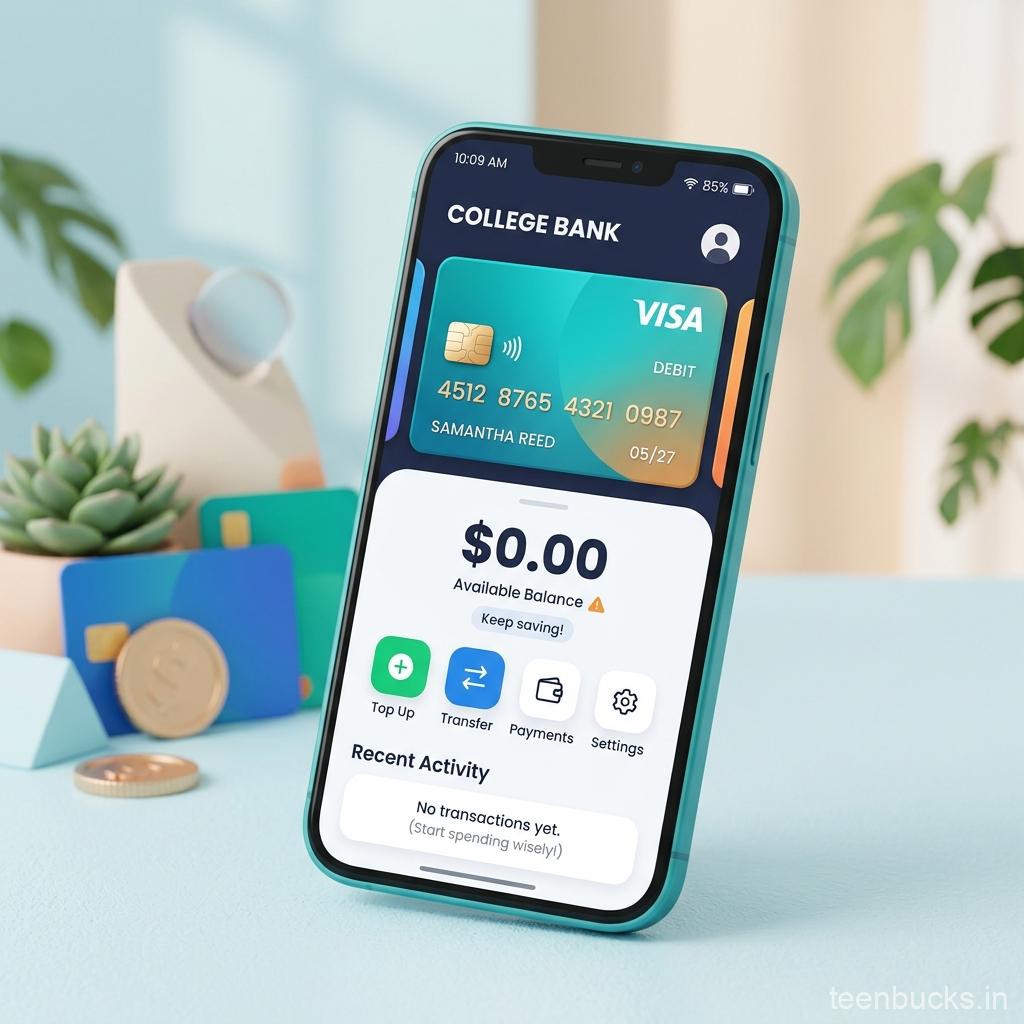
Three months later, his balance was ₹437. He had not bought anything. He had not transferred money out. The deductions were invisible: ₹299 for a physical debit card he did not remember ordering. ₹0.15 per SMS alert that stacked up to ₹12.45. ₹21 for an ATM withdrawal at a Kotak machine. And ₹4.50 for a cash deposit at the branch near his college.
Here is what actually changed. Kabir called customer care. He blocked the physical card. He switched to the virtual card only. He stopped using non-Kotak ATMs. He started using UPI and Scan & Pay for everything. His account became genuinely free — but only after he understood what “free” actually meant.
That is the entire problem. The account is free. But the bank makes money on the edges. And students do not read the edges.
📌 Key Takeaways
- Kotak 811 is genuinely zero balance — but “zero balance” does not mean “zero charges.”
- Physical debit card: ₹299/year. Virtual debit card: free. The difference is one tap in the app.
- SMS alerts cost ₹0.15 per SMS beyond 30 free per month. Maintain ₹10,000 combined balance to waive this.
- Cash deposit at branch/CDM: free for one transaction or ₹10,000/month. After that: ₹4.5 per ₹1,000.
- ATM withdrawals at Kotak ATMs cost ₹21 per transaction for 811 Full/Limited KYC. Non-Kotak ATMs: ₹20-21 plus ₹8.50 for balance enquiry.
- 811 Limited KYC caps your balance at ₹1 lakh and annual credits at ₹2 lakh. Full KYC removes these limits.
- Account closure requires a branch visit. There is no online closure option.
Quick Summary
- Kotak 811 hides charges in five places: physical debit cards, SMS alerts, cash deposits, ATM withdrawals, and KYC limits.
- The genuinely free version uses only the virtual card, UPI, and Kotak ATM withdrawals within limits.
- SMS charges are avoidable by maintaining ₹10,000 across savings + FDs or having salary credits.
- Cash deposits are free for one transaction or ₹10,000/month. After that, the fees compound.
- Full KYC unlocks higher limits but does not remove ATM fees. Lite KYC has the strictest restrictions.
In This Article
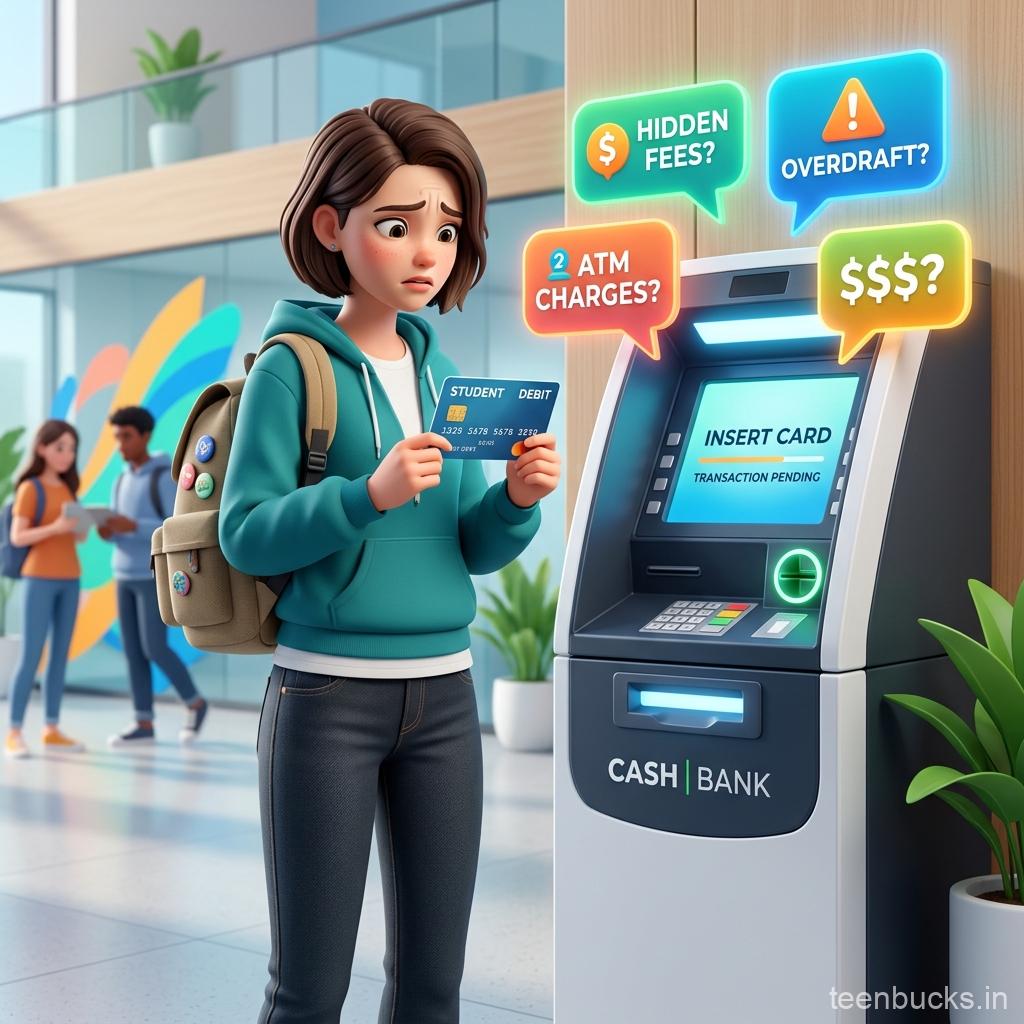
In this article, we will cover why Kotak 811 is not as free as it looks, the exact hidden charges that drain student balances, how the physical debit card trap works, the new SMS alert fees from December 2025, cash deposit and ATM charges most students miss, the KYC limit differences between Lite, Limited, and Full, how to avoid account freezes and closure hassles, the mistakes that cost students money, and the exact step-by-step system to keep your account 100% free.
Habit 1 — Kotak 811: Why “Zero Balance” Does Not Mean “Zero Charges”
Why this confusion exists
Banks are not charities. Kotak 811 is a customer acquisition tool — it gets you into the Kotak ecosystem so you eventually upgrade to paid products. The “zero balance” promise is real: you will never pay a penalty for keeping ₹0 in your account. But the bank makes money on debit cards, SMS alerts, ATM fees, and cash handling. These are not “minimum balance charges.” They are usage fees. And they are buried in the General Schedule of Features and Charges (GSFC (General Schedule of Features and Charges)) — a PDF most students never open.
The five hidden charge categories
Category 1 — Debit card fees: Physical card ₹299/year. Virtual card free. Category 2 — SMS alerts: ₹0.15 per SMS beyond 30 free/month from December 2025. Category 3 — Cash deposits: Free for one transaction or ₹10,000/month. Then ₹4.5/₹1,000. Category 4 — ATM withdrawals: ₹21 per transaction at Kotak ATMs for 811 Full/Limited KYC. Category 5 — KYC restrictions: Lite and Limited KYC cap your balance and transactions.
What it looks like in real life
Poulomi is a final-year student in Guwahati. She opened Kotak 811 for her internship stipend. Her first month: ₹6,500 credited. She withdrew ₹2,000 at a Kotak ATM. ₹21 deducted. She deposited ₹3,000 cash at the branch. Free — within her one-transaction limit. She ordered a physical debit card for “emergencies.” ₹299 deducted immediately. She received 47 SMS alerts that month. 30 were free. 17 cost ₹0.15 each. ₹2.55. Small, but annoying.

Her balance at month-end should have been ₹4,177. It was ₹3,855. The gap was not theft. It was fees she did not know existed.
📌 Key Takeaways
- “Zero balance” means no minimum balance penalty. It does not mean no usage fees.
- The bank makes money on cards, SMS, cash, and ATMs. These are your hidden leaks.
- Read the GSFC (General Schedule of Features and Charges) before opening. Or read this article. Same result, less PDF trauma.
Shift 1 — Kotak 811: The Physical Debit Card Trap (₹299/Year)
Why students fall for it
The app makes ordering a physical card feel like an upgrade. “Get your card now!” it says. “Tap here!” The virtual card is hidden in a submenu. The physical card is front and centre. And the fee — ₹299 per annum inclusive of taxes — is mentioned in grey text below a bright orange button.
The exact fee structure
- Physical debit card issuance: ₹299 p.a. (inclusive of taxes) for 811 Limited and Full KYC accounts
- Physical debit card replacement: ₹299 if lost or stolen
- Virtual debit card: Nil for all variants
- 811 Lite: No physical card option at all — only virtual
The fee is deducted upfront when you order the card. If your balance is ₹500 and you tap “Order Card,” your balance drops to ₹201 instantly citeweb_search:10#0web_search:10#11.
What it looks like in real life
Ayaan is a second-year student in Surat. He opened Kotak 811 with ₹1,000. He saw the “Get Physical Card” banner and tapped it. ₹299 deducted. His balance: ₹701. He never used the physical card. It sat in his wallet for three months. He used the virtual card for UPI and online payments anyway. The physical card was a ₹299 decoration.
The fix is simple. Do not order it. The virtual card does everything a student needs: online payments, UPI, Scan & Pay, and even international transactions after Full KYC citeweb_search:10#5.
📌 Key Takeaways
- Physical debit card = ₹299/year. Virtual card = ₹0.
- The virtual card handles UPI, online payments, and Scan & Pay. You do not need the physical one.
- If you already ordered it, block it and request a virtual-only reissue via customer care.
Reason 2 — Kotak 811: The SMS Alert Charges Nobody Reads (₹0.15/SMS)
The December 2025 change
Starting 1 December 2025, Kotak introduced a nominal SMS fee: ₹0.15 per SMS alert beyond 30 free SMS per month. This applies to transaction alerts for UPI, NEFT, ATM withdrawals, debit card usage, and cash transactions. KYC and promotional SMS remain free citeweb_search:10#2web_search:10#7.
How to avoid it completely
The bank offers two waivers: – Maintain a combined balance of ₹10,000 across Savings Account and Term Deposits – Ensure regular salary credits in your salary account
As a student, the first waiver is realistic. Keep ₹10,000 in a fixed deposit linked to your 811 account. The SMS charges vanish. Your FD earns interest. You build a savings habit. That is the entire fix citeweb_search:10#7.
What it looks like in real life
Sneha is a second-year student in Coimbatore. She uses UPI for everything — chai, mess advance, train tickets. She gets 40-50 SMS alerts per month. At ₹0.15 each beyond 30, that is ₹1.50-₹3.00. Not catastrophic. But over a year: ₹40. For a student, that is two days of mess food. She moved ₹10,000 from her savings to an FD. SMS charges stopped. She earns 3.5% on the FD. The system now works for her instead of against her.
📌 Key Takeaways
- SMS alerts beyond 30/month cost ₹0.15 each from December 2025.
- Maintain ₹10,000 across savings + FDs to waive SMS charges entirely.
- For high-UPI users, this waiver is non-negotiable.
Reason 3 — Kotak 811: Cash Deposit & ATM Charges That Eat Your Balance
The cash deposit trap
You would think depositing cash at your own bank is free. It is — until it is not. For Kotak 811 Full/Limited KYC: zero fees for one cash deposit transaction or ₹10,000 per month, whichever comes first. After that: ₹4.5 per ₹1,000, minimum ₹50 citeweb_search:10#3.
Example: You deposit ₹5,000 in week one. Free. You deposit ₹8,000 in week two. The first ₹5,000 is within your ₹10,000 limit. The remaining ₹3,000 triggers ₹13.50. But the minimum is ₹50. So you pay ₹50.
The ATM withdrawal trap
- Kotak ATM (811 Full/Limited KYC): ₹21 per financial transaction. Non-financial (balance enquiry, mini statement) is free.
- Non-Kotak ATM (811 Full/Limited KYC): ₹20-21 per financial transaction. ₹8.50 for non-financial. Free limit: 3 transactions in metro cities, 5 in non-metro cities per month citeweb_search:10#3.
The student reality: You withdraw ₹500 at a Kotak ATM. Fee: ₹21. That is 4.2% of your withdrawal. You check balance at a non-Kotak ATM. Fee: ₹8.50. For what? For looking at a number.
What it looks like in real life
Arnab is from Akola, a Tier-3 city. He opened Kotak 811 because there is no Kotak branch in his town. He withdraws cash at a nearby SBI ATM. First withdrawal: free (non-metro, 5 free transactions). Second withdrawal: ₹20. Third: ₹20. He checked his balance twice: ₹8.50 each. Total monthly ATM fees: ₹57. That is his weekly chai budget. Gone.
The fix: use UPI for payments. Use Scan & Pay at merchants. Withdraw cash only when necessary, and only at Kotak ATMs within your free limit.
📌 Key Takeaways
- Cash deposit: free for one transaction or ₹10,000/month. Then ₹4.5/₹1,000 (min ₹50).
- Kotak ATM withdrawals: ₹21 per transaction for 811 Full/Limited KYC.
- Non-Kotak ATM: ₹20-21 per withdrawal, ₹8.50 for balance enquiry. Use UPI instead.
Reason 4 — Kotak 811: The KYC Limits That Lock Your Money
The three account types
811 Lite: Wallet-like account. Max balance ₹5,000. Monthly credits capped at ₹5,000. Annual credits capped at ₹1.2 lakh. No physical debit card. No fund transfers before Full KYC. No cheque book citeweb_search:11#0web_search:11#6.
811 Limited KYC: Digital account with Aadhaar OTP. Max balance ₹1 lakh at any point. Aggregate annual credits not to exceed ₹2 lakh. Max online transfer ₹1 lakh. No cheque book. No branch transfers. 5 free transactions per month, then ₹3.5 per ₹1,000 citeweb_search:11#0.
811 Full KYC: Complete KYC via video call or branch visit. No balance limits. No credit limits. Cheque book available. Branch transactions available. All online transactions free.
Why this matters for students
Most students open 811 Limited KYC because it is instant. But if your internship stipend is ₹15,000 and your parents send ₹5,000, you are already at ₹20,000/month. Annual credits: ₹2.4 lakh. You hit the ₹2 lakh annual cap in 10 months. The bank may freeze further credits until you upgrade to Full KYC.
What it looks like in real life
Fatima is a second-year student in Lucknow. She tutors online and earns ₹12,000/month. Her parents send ₹4,000. Total monthly credits: ₹16,000. By August, her annual credits crossed ₹1.92 lakh. In September, a client payment of ₹3,000 bounced back. The app said: “Limit exceeded. Complete Full KYC to continue.”
She scheduled a video KYC via the app. It took 12 minutes. Her limits were removed. But the bounced payment delayed her rent transfer by 3 days. The KYC limit was not a hidden charge. But it was a hidden wall.
📌 Key Takeaways
- 811 Lite is a wallet, not a bank account. Avoid it unless you have no other option.
- 811 Limited KYC caps balance at ₹1 lakh and annual credits at ₹2 lakh.
- Full KYC removes all limits. Schedule it within the first month of opening.
Reason 5 — Kotak 811: Account Freeze & Closure Nightmares
The freeze risk
Kotak 811 accounts get frozen for “transaction patterns differ from your regular activities.” This is common if you upgrade to 811 Super (deposit ₹5,000, pay ₹399 fee) and then withdraw the ₹5,000 immediately. The algorithm flags this as suspicious. You then need video KYC, address verification, and multiple customer care calls to unfreeze citeweb_search:11#5.
The closure trap
You cannot close a Kotak 811 account online. Not through the app. Not through net banking. You must visit a branch. If you opened the account in Jaipur and now study in Chennai, you either travel or change your home branch via the app before closing citeweb_search:11#5.
If you close within 1-6 months of opening, closure fees may apply as per your variant. After 6 months: no closure charges citeweb_search:11#4.
What it looks like in real life
Vihaan is a second-year student in Indore. He opened Kotak 811 for a cashback offer. He upgraded to Super. He withdrew the upgrade amount. His account froze the next day. He called customer care 4 times. He submitted Aadhaar KYC, occupation details, and a real-time selfie. The account unfroze after 5 days. He decided to close it. The nearest branch was 28 km away. He still has the account. He just stopped using it.
That is the entire problem. A “digital-first” account that requires a physical branch to exit.
📌 Key Takeaways
- Account freezes are triggered by sudden pattern changes — especially Super upgrades followed by immediate withdrawals.
- Closure requires a branch visit. No online closure option exists.
- If you must close, withdraw all funds, stop using the account, and visit a branch when convenient.
Mistake 1 — Kotak 811: Ordering the Physical Debit Card Because “It Is Free”
❌ The trap: You see the “Get Physical Card” banner. You assume it is included. You tap it. ₹299 vanishes.
❌ Why it fails: The virtual card is genuinely free and handles 95% of student needs. The physical card is a ₹299/year upsell disguised as a feature.
❌ The fix: Use the virtual card only. Access it in the app under Bank → Virtual Debit Card. For ATM withdrawals, use cardless cash or visit a Kotak ATM with your phone.
Mistake 2 — Kotak 811: Ignoring the SMS Charge Waiver
❌ The trap: You get 40 SMS alerts a month. You pay ₹1.50. You think: “It is just ₹1.50.” You do nothing.
❌ Why it fails: Small leaks sink ships. ₹1.50/month is ₹18/year. Plus the psychological cost of paying for your own transaction notifications. Plus the fact that the waiver is easy.
❌ The fix: Move ₹10,000 to an FD. The SMS charges stop. You earn interest. Your account becomes cleaner.
Mistake 3 — Kotak 811: Depositing Cash Multiple Times at the Branch
❌ The trap: You deposit ₹3,000 on Monday. ₹4,000 on Wednesday. Both are below ₹10,000. But the fee structure counts transactions or amount — whichever hits the limit first. Two transactions = your free limit is gone.
❌ Why it fails: The second deposit triggers ₹4.5/₹1,000 (minimum ₹50). You pay ₹50 to deposit your own money.
❌ The fix: Deposit cash once per month. Consolidate. Or use UPI to receive money from friends — no fees, no branch visits.
Mistake 4 — Kotak 811: Using Non-Kotak ATMs for Balance Enquiries
❌ The trap: You are at a mall. You see an ICICI ATM. You check your balance. ₹8.50 deducted. You check again to confirm. Another ₹8.50.
❌ Why it fails: Balance enquiries at non-Kotak ATMs are not free. They cost ₹8.50 each. And they do not even give you cash.
❌ The fix: Check balance on the Kotak 811 app. It is free. It is instant. It does not charge you ₹8.50 to show you a number.
Mistake 5 — Kotak 811: Staying on Limited KYC for Too Long
❌ The trap: You opened the account with Aadhaar OTP. You never upgraded to Full KYC. Your credits hit ₹2 lakh. Payments bounce. Your account is restricted.
❌ Why it fails: Limited KYC is a temporary state. It is not meant for active earners. The ₹2 lakh annual cap is easy to hit with a stipend + pocket money + freelance income.
❌ The fix: Complete Full KYC within 30 days of opening. Video KYC takes 10 minutes. One and done.
What This Looks Like in Real Life
Scenario 1: Kabir, First-Year Hosteler, Jaipur
Kabir opens Kotak 811 with ₹800. He orders the physical card. ₹299 deducted. Balance: ₹501. He gets 35 SMS alerts in month one. 5 beyond the free limit. ₹0.75. He withdraws ₹200 at a Kotak ATM. ₹21 deducted. He deposits ₹2,000 cash at the branch. Free — one transaction, within ₹10,000. His balance should be ₹2,279. It is ₹1,959. The gap: ₹320.75 in fees he did not anticipate.
Realisation: he blocks the physical card. Switches to virtual-only. Stops ATM withdrawals — uses UPI for everything. Month two: zero fees. His ₹3,500 pocket money now stretches to ₹3,500. Not ₹3,179.
Scenario 2: Poulomi, Final-Year Student, Guwahati
Poulomi earns ₹8,000/month from tutoring. She opened Kotak 811 Limited KYC. By month 8, her annual credits hit ₹2.04 lakh. A client payment of ₹4,000 bounces. She panics. She schedules video KYC via the app. Uploads PAN. Does a live video call. 11 minutes. Full KYC approved. Limits removed. The bounced payment is reprocessed. She now keeps ₹12,000 in an FD. SMS charges stopped. She has a cheque book for her rent agreement. The upgrade cost nothing. The delay cost her 3 days of stress.
Scenario 3: Ayaan, Day-Scholar, Surat
Ayaan lives at home. No rent. No mess bill. He uses Kotak 811 for his freelance design income. He receives $40 via PayPal every month. Converted to ₹3,300. He never deposits cash. He never uses ATMs. He uses the virtual card for online payments and UPI for local transfers. His account balance stays between ₹5,000-₹15,000. He completed Full KYC on day one. He has never paid a single fee. His Kotak 811 is genuinely free — because he designed his usage around the fee structure.
How This Looks Across India
Mumbai
In Mumbai, a student named Devansh in a shared flat in Andheri uses Kotak 811 for his internship stipend of ₹12,000. He withdrew cash at a non-Kotak ATM near his PG three times. First: free (metro limit: 3). Second: ₹20. Third: ₹20. Plus one balance enquiry: ₹8.50. Total: ₹48.50. He now walks 800 metres to the Kotak ATM at the metro station. Or uses UPI at the kirana store. The walk is free. The UPI is free. The ATM near his PG is not.
Delhi
In Delhi, a student named Zoya in a North Campus hostel deposits her tuition fee refund cheque as cash. She deposits ₹8,000 at the branch. Free. Then she deposits ₹4,000 the same week. The first deposit used her one free transaction. The second triggers ₹4.5/₹1,000 on ₹4,000 = ₹18. But minimum ₹50. She pays ₹50. She learns: consolidate cash deposits. One trip. One deposit. Done.
Bangalore
In Bangalore, a student named Karthik in a Koramangala PG upgraded to 811 Super for the ₹500/month cashback offer. He deposited ₹5,000. ₹399 deducted as upgrade fee. He withdrew ₹5,000 the next day. His account froze. “Transaction patterns differ from regular activities.” He spent 4 days on calls with customer care. He submitted video KYC. He got unblocked. He withdrew the ₹399 refund. He downgraded back to regular 811. The cashback was not worth the freeze.
Hyderabad
In Hyderabad, a student named Meera at an engineering college in Gachibowli uses Kotak 811 for her mess payments. She gets 42 SMS alerts per month. 12 beyond the free limit. ₹1.80. She moved ₹10,000 from her savings to a 6-month FD. SMS charges stopped. She earns ₹29 in interest. Net gain: ₹30.80. Small. But the principle matters: she stopped paying for notifications about her own money.
Pune
In Pune, a student named Kunal in a Viman Nagar flat uses his physical debit card for petrol payments. He swipes it 8 times a month. The card works. But he forgot he paid ₹299 for it. Over 3 years: ₹897. For a card he could have replaced with UPI at every petrol pump. He blocked the physical card. Started using PhonePe at the bunk. Same convenience. Zero cost.
Chennai
In Chennai, a student named Surya at Anna University opened Kotak 811 Lite by mistake. He did not know the difference between Lite and Full KYC. His balance hit ₹5,000. His next pocket money transfer of ₹3,000 bounced. He could not transfer funds out. He called customer care. They explained: Lite is a wallet. Upgrade to Full KYC to unlock transfers. He did. 15 minutes. Problem solved. But the confusion cost him a day.
Kolkata
In Kolkata, a student named Om in a Salt Lake hostel wanted to close his Kotak 811 after graduation. He assumed it would be a few taps in the app. It was not. He had to visit the Park Street branch. 12 km away. He changed his home branch to Salt Lake via the app first. Then visited the local branch. Closure took 20 minutes. No charges — it had been 18 months since opening. The lesson: digital opening does not mean digital closing.
Try This Today: Your 7-Step Action Plan
□ Step 1 (2 minutes): Open the Kotak 811 app. Check if you have a physical debit card. If yes, block it. Request virtual-only via customer care if needed.
□ Step 2 (2 minutes): Check your last 3 months’ SMS count. If you get more than 30 transaction SMSes per month, move ₹10,000 to an FD. SMS charges stop immediately.
□ Step 3 (1 minute): Delete saved ATM habits. Check balance only on the app. Never at non-Kotak ATMs.
□ Step 4 (Ongoing): Consolidate cash deposits. One trip per month. One deposit. Stay within the ₹10,000 or one-transaction limit.
□ Step 5 (10 minutes): If you are on Limited KYC, schedule Full KYC video call now. Upload PAN. Complete the call. Remove all limits.
□ Step 6 (1 minute): Set a UPI PIN if not done. Use Scan & Pay at merchants. Use UPI for peer-to-peer transfers. Minimise cash and ATM usage.
□ Step 7 (Habit loop): Every month, review your account statement. Look for deductions you do not recognise. Question every ₹0.15, ₹21, and ₹299. Awareness is the entire system.
Final Thought
The habits I started in my early 20s as a student in India did not make me rich overnight.
They did something quieter. They taught me that “free” is a marketing word, not a promise. Every bank account has edges where money leaks. The virtual card is free. The physical card is not. The app is free. The SMS is not. UPI is free. The ATM is not. The gap between “zero balance” and “zero cost” is where banks make their money — and where students lose theirs.
You do not need to become a different person. You just need to notice what you are doing slightly more often. And then design your behaviour around the fee structure instead of letting the fee structure design your balance.
Your future self is built one small decision at a time. The decision to block the physical card. The decision to check balance on the app. The decision to consolidate one cash deposit instead of three. Those decisions — invisible, boring, repeated — are what keep a “free” account actually free.
💾 Save this post and share it with the friend who just opened Kotak 811 and thinks “zero balance” means they are safe.
📖 Read These Next
→ How to File ITR as a Student with Freelance Income in India (2026 — No CA Needed)
→ The Fake Credit UPI Scam: How Indian Students are Getting Tricked on GPay
→ How to Start a ₹500 SIP on Groww or Zerodha (Student Guide 2026)
📚 Related Articles You Will Love
- Kotak 811 vs Fi Money: Which Zero-Balance Account Is Actually Free for Students?
- How to Switch from Physical to Virtual Debit Card on Kotak 811
- Best Zero-Balance Savings Accounts for Indian Students in 2026
- Understanding KYC: Limited vs Full KYC for Student Bank Accounts
Frequently Asked Questions
Is Kotak 811 really free for students?
Kotak 811 is a zero-balance account — meaning no minimum balance penalty. However, it is not entirely free. Physical debit cards cost ₹299/year, SMS alerts beyond 30/month cost ₹0.15 each, cash deposits beyond one transaction or ₹10,000/month cost ₹4.5/₹1,000, and ATM withdrawals at Kotak ATMs cost ₹21 per transaction. The account can be kept 100% free by using only the virtual card, UPI, and staying within free limits.
What is the physical debit card fee for Kotak 811?
The physical debit card for Kotak 811 Limited and Full KYC accounts costs ₹299 per annum inclusive of taxes. This is deducted upfront when you order the card. Replacement of a lost or stolen card also costs ₹299. The virtual debit card is completely free.
How do I avoid SMS charges on Kotak 811?
From 1 December 2025, Kotak charges ₹0.15 per SMS alert beyond 30 free per month. To avoid this, maintain a combined balance of ₹10,000 across your Savings Account and Term Deposits, or ensure regular salary credits. KYC and promotional SMS remain free regardless of balance.
What are the cash deposit charges for Kotak 811?
For Kotak 811 Full and Limited KYC accounts, cash deposits at branches or CDMs are free for one transaction or up to ₹10,000 per month, whichever comes first. After that, the charge is ₹4.5 per ₹1,000 with a minimum of ₹50 per transaction.
What are the ATM withdrawal charges for Kotak 811?
For 811 Full and Limited KYC accounts, Kotak ATM withdrawals cost ₹21 per financial transaction. Non-financial transactions (balance enquiry, mini statement) are free at Kotak ATMs. At non-Kotak ATMs, financial transactions cost ₹20-21 and non-financial transactions cost ₹8.50. Metro cities get 3 free non-Kotak ATM transactions per month; non-metro cities get 5.
What is the difference between Kotak 811 Lite, Limited KYC, and Full KYC?
811 Lite is a wallet-like account with a ₹5,000 balance cap and no fund transfers. 811 Limited KYC allows a ₹1 lakh max balance and ₹2 lakh annual credits with no cheque book. 811 Full KYC has no limits, offers cheque books, and enables all branch services. Students should upgrade to Full KYC within 30 days of opening.
Can I close Kotak 811 online?
No. Kotak 811 accounts cannot be closed online or through the app. You must visit a Kotak branch to close the account. If your home branch is far, you can change your home branch via the app or net banking before visiting. Closure within 1-6 months of opening may attract fees depending on the variant.
Why did my Kotak 811 account get frozen?
Accounts are frozen when transaction patterns differ significantly from regular activity — for example, upgrading to 811 Super and immediately withdrawing the deposited amount. To unfreeze, you must complete additional KYC verification including video KYC, address verification, and identity confirmation via customer care.
Do I need a physical debit card for Kotak 811?
No. The virtual debit card inside the Kotak 811 app handles online payments, UPI, Scan & Pay, and bill payments. After Full KYC, it also works for international transactions. Most students do not need a physical card at all.
How is Kotak 811 different from other zero-balance accounts?
Kotak 811 was one of India’s first fully digital zero-balance accounts and is backed by Kotak Mahindra Bank. Compared to newer neo-bank accounts (Fi, Jupiter), Kotak 811 has more established branch infrastructure but also more traditional fee structures like physical card fees and SMS charges. The key difference is that Kotak 811’s fees are avoidable with disciplined usage, while some neo-banks offer simpler fee-free structures but with fewer branch services.