

You finally crack your campus placement. After months of aptitude tests, coding rounds, interviews and that one HR call that kept getting postponed, the offer letter arrives: ₹6.5 LPA CTC plus a ₹50,000 joining bonus. Not bad for a first job.
You’re moving to Pune or Bengaluru. The PG wants a deposit. You need formal clothes, a few things for your room, and money to survive until that first salary arrives. That ₹50,000 looks like it’s going to solve half your problems. You sign the offer.
Ten months later, something changes. Maybe the workload has become unbearable. Maybe the team isn’t what you expected. Or maybe another company is offering you a much better role. You resign—and HR sends your full-and-final settlement: Joining bonus recovery: ₹50,000.
Wait. You remember getting only ₹38,000 in your bank account. The remaining ₹12,000 was deducted as TDS when the bonus was paid. Now the company wants the entire ₹50,000 back? Yes, that can happen. And the really awkward part isn’t just the repayment. It’s figuring out what happens to the tax.
Let’s understand this properly before you sign your first offer—or resign from your first job.
The student and payroll examples below are illustrative, not real employee records.
First, what is a joining bonus clawback?
A joining bonus, also called a sign-on bonus, is a one-time payment an employer may offer when you join. Unlike your regular monthly salary, it may come with a condition. Something like: “If the employee voluntarily resigns within 12 months of joining, the employee shall repay 100% of the joining bonus.”
That repayment requirement is called a clawback. The company has effectively said: we’ll pay you an extra amount for joining, but you must satisfy the agreed employment condition to keep it. Not every joining bonus has a clawback, and not every agreement uses the same repayment formula. Some require repayment of the full bonus, while others reduce the amount as you complete each month of service. The only reliable way to know is to read your offer letter and any bonus annexure.
The ₹50,000 problem at a glance
| Item | Illustrative amount |
|---|---|
| Gross joining bonus | ₹50,000 |
| TDS allocated to the bonus in this example | ₹12,000 |
| Cash credited to your account | ₹38,000 |
| Gross clawback demanded on early exit | ₹50,000 |
| Difference between original cash received and gross recovery | ₹12,000 |
The ₹12,000 is an assumed payroll withholding amount, not a fixed tax rate for joining bonuses. Your actual TDS depends on estimated taxable salary, the applicable tax regime, available declarations and payroll calculations. The company does not automatically deduct 20% or 24% from every joining bonus.
1. Why companies offer joining bonuses in the first place
Not every joining bonus is designed to trap you. Sometimes a company genuinely wants to make its offer attractive without permanently increasing fixed salary. But there are a few reasons employers prefer a one-time payment.
Reason 1: ₹50,000 upfront looks better than a smaller annual increment
Imagine two offers:
- Offer A: ₹6,00,000 annual fixed compensation plus ₹50,000 joining bonus.
- Offer B: ₹6,50,000 annual fixed compensation with no joining bonus.
Both advertise ₹6.5 lakh in first-year cash compensation under these assumptions. But in year two, if nothing changes, Offer A may fall back to ₹6 lakh while Offer B remains ₹6.5 lakh. That’s a ₹50,000 difference in recurring annual compensation. And the joining bonus in Offer A might still carry a repayment condition. This is why I wouldn’t judge two placement offers only by the biggest CTC written on the first page. Our guide to CTC versus in-hand salary explains how employer costs, salary components and deductions change what you actually receive.
Reason 2: Employers want people to join and stay
Hiring isn’t free. There are interviews, onboarding, training, replacement costs and work that gets delayed when someone leaves unexpectedly. A joining bonus may help an employer attract candidates who have competing offers, while a clawback discourages early departures. Whether that condition is reasonable depends on the wording and circumstances.
Reason 3: It can make leaving financially painful
This is the part students should take seriously. Imagine you’re ten months into a 12-month agreement. You’ve received a better job offer, but your contract requires the full ₹50,000 back if you resign before completing the year. Two more months could make a large difference to your exit cost. That doesn’t mean you should stay in a genuinely harmful workplace just to save the bonus—it means you should calculate the exit cost before making the decision.
2. Gross versus net joining bonus: where the real shock happens
Let’s follow the money. You join a company in July 2026. Your offer includes a ₹50,000 bonus and a 12-month repayment condition.

Figure 1: Your bank notification shows net cash after TDS, but the clawback contract binds you to the full gross figure.
When the bonus is paid
| Particulars | Amount |
|---|---|
| Gross joining bonus | ₹50,000 |
| Illustrative TDS | −₹12,000 |
| Bank credit | ₹38,000 |
The employer has paid ₹38,000 to you and withheld ₹12,000 as tax against your PAN. So the gross salary component was ₹50,000 even though the bank credit was lower. Under the Income-tax Act, 2025, which applies from 1 April 2026, salary TDS is governed by Section 392. The corresponding provision under the older Income-tax Act, 1961 was Section 192. [Source: Income Tax Department — TDS compliance guidance].
When you resign ten months later
Your contract says the joining bonus is repayable in full if you leave before completing 12 months. HR issues a ₹50,000 recovery calculation. From your perspective, that’s painful because you only received ₹38,000 in spendable cash. But from the employer’s perspective, the gross bonus was ₹50,000. The agreement may permit gross recovery. It does not automatically have to follow the net amount credited to your bank.
Here’s the distinction worth remembering:
- Cash-flow question: How much money must you pay back now?
- Tax question: What treatment is available for the bonus and tax already reported?
They are connected, but they are not the same question. Your original ₹12,000 TDS isn’t necessarily lost. It may remain reported as a tax credit, and the final position depends on the return and any permitted adjustments. But that doesn’t mean the tax department will automatically return ₹12,000 because HR recovered the bonus.
What if notice-pay recovery is also included?
Suppose HR additionally claims ₹12,000 for an unserved notice period. Your statement might now show:
| Recovery item | Amount |
|---|---|
| Joining bonus | ₹50,000 |
| Separate notice-period shortfall | ₹12,000 |
| Total proposed recovery | ₹62,000 |
This is only an example of two separate contractual claims. It is not a statutory joining-bonus penalty. And don’t automatically add 18% GST to notice-pay or bond recovery. CBIC Circular No. 178/10/2022-GST explains that specified employee bond and early-exit recoveries aren’t taxable simply as consideration for tolerating early resignation. If GST appears on your exit statement, ask payroll to identify the exact supply, legal basis and invoice rather than accepting or rejecting it based on a social media post. [Source: Read the official CBIC circular].
3. Can you recover the TDS after repaying your joining bonus?
This is the question I would want answered before handing over ₹50,000. And unfortunately, there isn’t a universal one-click refund process. Two things matter: when the bonus was paid and when the recovery happens, and how the income and recovery are reported.
Case A: Bonus and recovery happen in the same tax year
Suppose: (1) You join in April 2026. (2) Your employer pays the joining bonus in May 2026. (3) You resign in December 2026. Both events fall in Tax Year 2026–27.
Because payroll is dealing with both events in the same tax year, you can ask whether the recovery can be reconciled in that year’s salary and TDS records. Depending on the facts and applicable treatment, payroll may be able to make appropriate adjustments. But there is no universal requirement that HR must recover only ₹38,000 instead of ₹50,000. There is also no guarantee that payroll can simply remove the bonus from taxable salary after repayment.
Ask for a written explanation covering:
- Gross amount being recovered.
- Whether payroll will adjust reported salary income.
- What happens to the original TDS credit.
- Whether corrected withholding records will be filed, if necessary.
- What the final tax certificate and settlement statement will show.
Don’t accept “It will automatically adjust when you file your ITR” as the entire answer.
Case B: The bonus was paid in a previous tax year
This is more complicated. Let’s say you received the bonus in January 2026 but repaid it in November 2026. The bonus belongs to an earlier financial year governed by the previous income-tax framework. Your employer may already have issued tax records for that period, and you may already have filed the corresponding return. Simply paying the money back in November doesn’t guarantee that an earlier year’s salary income or TDS can be reversed.
And this is where two important tax cases need to be understood properly.
What Indian tax tribunals have actually said: Tax relief is conditional, not automatic
The Income-tax Act does not contain an express, automatic mechanism to refund taxes paid on a salary bonus that is later repaid upon resignation. Instead, tax relief depends entirely on specific contractual terms, timing, and how courts interpret “real income accrued”. Two landmark decisions from the Income Tax Appellate Tribunal (ITAT) reached contrasting conclusions on their individual facts:
The 2016 case: S.S.N. Ravi v. ACIT (Relief Denied)
In this Chennai ITAT case, an employee repaid a ₹25 lakh sign-on bonus after resigning from Barclays to join Deutsche Bank. He sought to reduce his taxable salary by the repaid ₹25 lakh. The tribunal refused to grant relief, holding that the bonus was already unconditional salary income that had accrued and been received in full during employment; repaying it later upon voluntary resignation was deemed a subsequent “application of income” rather than an income diversion. [Source: Read the 2016 ITAT decision on Indian Kanoon].
The 2026 case: Shriram Bagavathyappan v. DCIT (Relief Granted)
On 24 February 2026, the Delhi ITAT evaluated a different dispute involving ₹17.5 lakh in recovered joining and retention bonuses from employment at Flipkart. The tribunal decided in favor of the employee, concluding that the recovered sum did not represent “real income” that had accrued to the taxpayer because the bonus was subject to an overriding contractual obligation of service tenure. [Source: Read the 2026 ITAT decision on Indian Kanoon].
The critical takeaway: Tax relief after repaying a bonus is strictly conditional. The Chennai and Delhi tribunals reached opposite outcomes based on the nuanced facts, agreement wordings, and assessment years in each case. You must never assume an automatic tax refund or expect the Income Tax Department to issue an immediate credit just because you repaid gross money to your previous employer. Filing positions under the newer Income-tax Act, 2025 framework require careful factual reconciliation with a qualified Chartered Accountant.
My advice: If a significant bonus is being recovered—especially across tax years—get the employer’s computation and the tax records reviewed by a qualified tax professional before choosing how to file. If you are handling tax filings on your own, review our guide on filing ITR without a chartered accountant for foundational tax-filing principles.
One more important point: an updated return (ITR-U) is not a general method to increase a refund. The Income Tax Department’s guidance expressly restricts updated returns that reduce tax liability or increase refunds. [Source: Income Tax Department — ITR FAQs].
4. Can a company legally recover a joining bonus if you resign?
You’ve probably heard both versions of this argument: “Employment bonds are illegal in India. Don’t pay anything.” And the opposite: “You signed the agreement, so HR can demand whatever amount it wants.” Neither is a safe blanket rule.

Figure 2: Resigning before your tenure ends triggers contractual clauses, but employers cannot force you to work against your will.
What Sections 27, 73 and 74 actually mean
- Section 27 of the Indian Contract Act, 1872 addresses agreements restraining lawful trade or professional activity.
- Sections 73 and 74 govern compensation for contractual breaches, including situations where an agreement specifies a sum payable on breach.
- Section 74 permits reasonable compensation, subject to the contractual ceiling, with the precise outcome depending on the circumstances. It does not make every stipulated amount automatically recoverable or automatically invalid.
The Supreme Court’s important 2025 judgment
In Vijaya Bank v. Prashant B. Narnaware, decided on 14 May 2025, the Supreme Court upheld a clause requiring an employee to pay ₹2 lakh if he resigned before completing a three-year minimum service period. The Court found the clause enforceable in the circumstances, including the employer’s retention interests and the reasonableness of the condition. This is important because the judgment directly contradicts the popular claim that every minimum-service bond is void under Section 27. [Source: Read the Supreme Court judgment]. But this also doesn’t mean every ₹2 lakh bond at every private company must be upheld. The nature of the job, contractual language, reasonableness and surrounding facts still matter.
Is a joining-bonus repayment different from a training bond?
Yes, potentially. A training bond may involve disputed recruitment or training costs. A joining-bonus clawback involves an identifiable cash payment made to the employee. That can make the amount paid easier to establish. Still, whether the employer can recover the full amount depends on the terms and applicable law. Don’t assume that the employer must win because it paid money. Don’t assume it must lose because the agreement mentions a minimum tenure.
Can they force you to continue working?
An employer generally cannot compel you to keep providing personal employment services against your will. Under Article 23 of the Constitution of India, forced labor is strictly unconstitutional. But resigning does not necessarily erase contractual monetary obligations. You may be able to leave while still having a genuine dispute over what is owed. That is the distinction to understand.
What about relieving letters and background verification?
This is often what worries freshers more than the repayment itself. Your next employer asks for a relieving letter or an employment verification. Meanwhile, your previous employer says your clearance is pending. What happens next depends on the employer’s process, the documents involved and applicable employment law.
Some employers may delay administrative clearance while disputing dues. That doesn’t establish that every such withholding is lawful. Likewise, it would be irresponsible to promise that a company will never sue over ₹50,000, or that every employer will threaten you with negative background verification. Ask for the exact outstanding amount in writing. Keep your resignation acknowledgement, last working day confirmation, payslips and employment records. For broader guidance on building a safe emergency reserve to absorb sudden career transitions, read our checklist of first salary money moves for young graduates.
If the employer threatens false reporting, withholds legally payable wages or refuses required service documentation, seek advice through the relevant labour authority or qualified legal professional. Don’t disappear from work simply because the bonus calculation feels unfair. A documented exit is much easier to defend than an avoidable dispute over absence.
5. Four things to check before signing a joining-bonus agreement
This is the part I wish every campus-placement student read before accepting their offer.
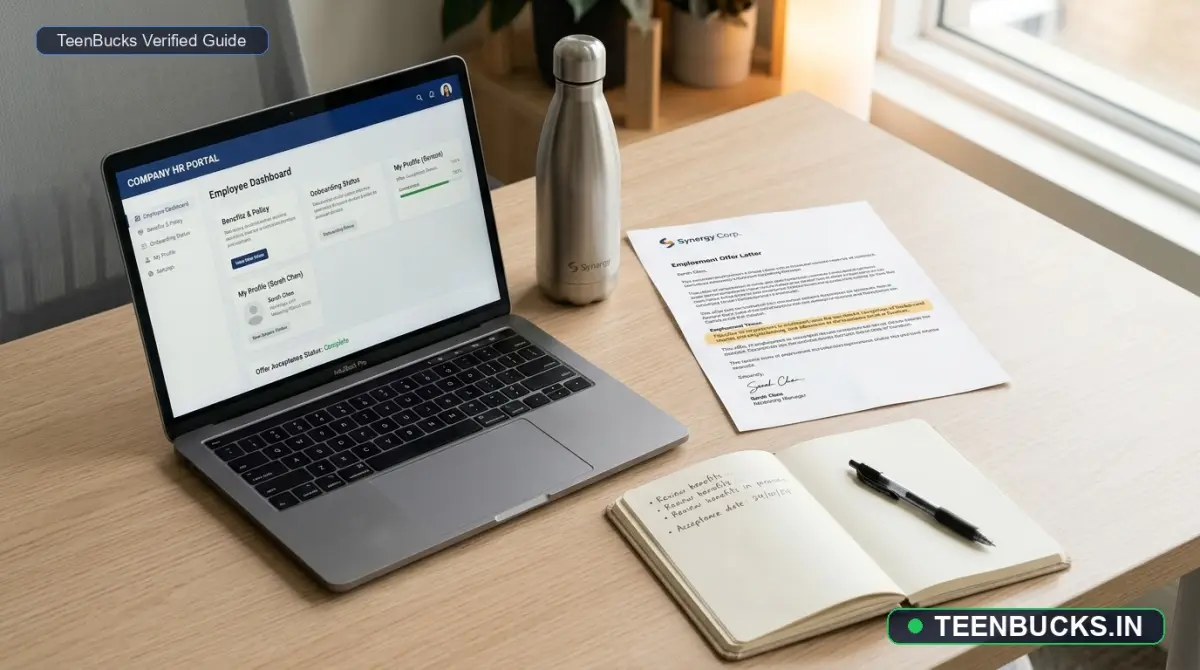
Figure 3: Review the clawback conditions in your employment annexure before accepting the offer.
Check 1: What exactly triggers the repayment?
These two clauses are not the same:
- Clause A: Repayment applies if you voluntarily resign within 12 months.
- Clause B: Repayment applies if employment ends for any reason within 12 months.
Under Clause B, the employer may argue that the repayment condition also applies to certain employer-initiated terminations, depending on the complete contract and its enforceability. That is a much wider condition. I’d ask HR to clarify exclusions for layoffs, company restructuring, disability-related exit, employer breach and other involuntary circumstances. Get that clarification in the signed agreement or an authorised written amendment.
Check 2: Is repayment based on gross bonus or net cash?
This one can save you a serious headache. Ask: “If I receive ₹50,000 gross but only ₹38,000 is credited after TDS, what exact amount would be recovered if I leave early, and how would the tax be handled?” Don’t settle for a vague reply such as “As per company policy.” Ask to see the policy and a sample recovery calculation.
Check 3: Is the repayment pro-rated?
This means the amount reduces as you complete more of the required service. Imagine your agreement says ₹50,000 is repayable over a 12-month period, with monthly pro-rata reduction. You leave after nine completed months. The illustrative calculation is:
Clawback Amount = ₹50,000 × (12 − 9) / 12 = ₹12,500
That means ₹12,500 would be recoverable under that particular formula, before any separately applicable issues. Compare it with an all-or-nothing clause demanding the entire ₹50,000 before the 12th month is complete. Huge difference. But don’t assume pro-rating is an automatic legal right. Ask for it to be written into the agreement.
Check 4: Is it a joining bonus or relocation reimbursement?
These are not automatically interchangeable. A joining bonus is generally cash compensation for joining. A genuine relocation arrangement may reimburse qualifying expenses related to an employer-directed transfer or other eligible work-related move. Tax treatment depends on the actual purpose, applicable exemptions and documentation. A lump-sum relocation allowance is not automatically tax-free just because the employee provides a few bills.
For a fresher moving to a first job, don’t assume every PG deposit, new outfit or personal moving expense qualifies for an income-tax exemption. Ask payroll to explain which payments are taxable and which, if any, qualify for specific exemptions. If the company offers both forms of assistance, compare their actual after-tax value and repayment conditions, not merely the headline amount.
6. How to handle a joining-bonus clawback when resigning
Suppose you’ve already signed the agreement. A better offer arrives and you want to leave. You need a plan, not five angry emails to HR.
Step 1: Ask your next employer about a buyout
A joining bonus buyout means asking your new employer to provide additional joining compensation to help cover a repayment obligation at your current company. You can say: “My current employment agreement has a ₹50,000 joining-bonus recovery condition that is still active. Is there flexibility for a one-time joining payment to help cover this exit cost?” Some employers may consider it, particularly for candidates they want to hire quickly. But it’s a negotiation, not a standard entitlement, and the new payment may itself be taxable or come with another clawback. Read the next offer just as carefully as the first.
Step 2: Request a pro-rated settlement
Even if your original agreement doesn’t contain pro-rating, you can ask. For example: “I’ve completed ten months of the 12-month period. Could management consider limiting the recovery to the remaining two months of the commitment?” A purely illustrative proportional amount would be:
Pro-rata Sum = ₹50,000 × (2 / 12) = ₹8,333.33
That doesn’t mean HR must accept ₹8,333 instead of ₹50,000. But it’s a concrete starting point for negotiation. If HR agrees to waive or reduce anything, get the final figure and terms in writing.
Step 3: Get a complete tax and final-settlement calculation
Before paying, request an itemised full-and-final statement showing:
- Gross joining bonus and original TDS.
- Contractual basis for recovery.
- Whether any pro-rata adjustment or waiver was approved.
- Separate notice-pay or other claims.
- Available salary, leave encashment and reimbursements.
- Net amount payable by you or to you.
- How the recovery will be reflected in tax and payroll records.
Check your tax credit information through the official Income Tax portal and reconcile it against the employer’s documents. Do not sign a full-and-final acknowledgement stating all amounts are correct if the material figures are still disputed. If you do settle, request written confirmation of payment and closure of the recovery account. If the employer doesn’t agree, preserve the correspondence and obtain advice before deciding whether to dispute the demand formally.
7. What if staying two more months saves you ₹50,000?
Here’s one last calculation worth doing. Imagine: (1) Your current job pays ₹40,000 take-home each month. (2) A new job offers ₹52,000 take-home. (3) Your ₹50,000 clawback expires in two months. (4) You can choose whether to join now or after that period.
The new job pays ₹12,000 more each month. Over two months, that’s ₹24,000 extra take-home. If leaving immediately really triggers a full ₹50,000 recovery while waiting two months eliminates it, there may be a financial reason to consider staying—assuming the new employer can defer joining.
But that’s not the whole comparison. You also need to consider the new offer’s expiry date, career growth, current working conditions, notice obligations, bonuses and the tax implications. Sometimes paying a legitimate exit cost is financially sensible because the new opportunity is much better. Sometimes waiting a few weeks saves a large sum without damaging your career. The important thing is that you choose after doing the maths—not after HR surprises you.
The TeenBucks takeaway
A ₹50,000 joining bonus isn’t something to reject automatically. It may be genuinely useful when you’re moving cities and starting from zero. But before treating it as free money, check three things: when you earn the right to keep it, how much you must repay if you leave, and what happens to the tax.
Your offer letter should answer those questions. If it doesn’t, ask. And if the answers still don’t make sense, don’t sign on the assumption that you’ll figure it out later. You worked hard enough to get that job. Spend ten extra minutes understanding the deal.
Official sources and legal references
- Income Tax Department — TDS compliance under the Income-tax Act, 2025
- Income Tax Department — Income-tax return FAQs
- CBIC — Circular No. 178/10/2022-GST
- Supreme Court — Vijaya Bank v. Prashant B. Narnaware (2025)
- Chennai ITAT — S.S.N. Ravi v. ACIT (2016)
- Delhi ITAT — Shriram Bagavathyappan v. DCIT (2026)
Editorial note: This article explains general Indian employment-contract and income-tax issues as of 16 November 2026. Examples are hypothetical. Actual outcomes depend on contracts, tax periods, reporting and applicable law; disputed recoveries may require professional advice.